Showing posts with label Food Dictionary. Show all posts

Monday, March 23, 2009

Mung Bean (Kacang Hijau)


Mung bean, also known as green bean, mung, moong, mash bean, munggo or monggo, green gram, golden gram, and green soy, is the seed of Vigna radiata which is native to India and Pakistan. The split bean is known as moong dal, which is green with the husk, and yellow when dehusked. The beans are small, ovoid in shape, and green in color. The English word "mung" derives from the Hindi moong.

The mung bean is one of many species recently moved from the genus Phaseolus to Vigna and is still often seen cited as Phaseolus aureus or Phaseolus radiatus. These are all the same plant.

Climate and soil

Mung beans are mainly cultivated in India, Philippines, Indonesia, China, Burma, and Bangladesh, but also in hot and dry regions of South Europe and Southern USA. In India and Bangladesh, they are grown during two seasons. One is the Rabi season (starting November), and the other is the Kharif season (starting March). Mung beans are tropical (or sub-tropical) crops, and require warm temperatures (optimally round 30-35°C). Loamy soil is best for pusap cultivation.

Uses

Mung beans are commonly used in Chinese cuisine, where they are called lǜ dòu ( literally "green bean"), as well as in Japan, Korea, Pakistan, India, Thailand and Southeast Asia. In Vietnam, they are called đậu xanh (again, literally "green bean"). They are generally eaten either whole (with or without skins) or as bean sprouts, or used to make the dessert "green bean soup". The starch of mung beans is also extracted from them to make jellies and "transparent/cellophane" noodles. In Vietnam, the transparent wrapping of Vietnamese spring rolls is made from mung bean flour. In Filipino cuisine, meat is sauteed with garlic, onions, and bay leaves, then mung beans are added and cooked. Mung batter is used to make crepes named Pesarattu in Andhra Pradesh, India.

Whole mung beans are generally prepared from dried beans by boiling until they are soft. In Chinese cuisine, whole mung beans are used to make a tāng shuǐ, or dessert, otherwise literally translated, "sugar water", called lǜdòu tāng shuǐ, which is served either warm or chilled, and is considered an antidote to thirst. In Indonesia, they are made into a popular dessert snack called es kacang hijau, which has the consistency of a porridge. The beans are cooked with sugar, coconut milk, and a little ginger. Although whole mung beans are also occasionally used in Indian cuisine, beans without skins are more commonly used; but in Kerala, whole moong dal (cheru payaru) is commonly boiled to make a dry preparation that is often had with rice gruel (kanji). In the Philippines, it is the main ingredient of the dessert hopiang munggo.

Without skins

With their skins removed, mung beans are light yellow in color. They are made into mung bean paste by de-hulling, cooking, and pulverizing the beans to the consistency of a dry paste. The paste is sweetened and is similar in texture to red bean paste though the smell is slightly more bean-like. In several Asian countries, de-hulled mung beans and mung bean paste are made into ice creams or frozen ice pops and are very popular dessert items. In Taiwan, mung bean paste is a common filling for moon cakes. In China, the boiled and shelled beans are used as filling in glutinous rice dumplings eaten during the dragon boat festival (端午节).

Dehulled mung beans can also be used in a similar fashion as whole beans for the purpose of making sweet soups. Mung beans in some regional cuisines of India are stripped of their outer coats to make mung dal. In other regions of India such as Andhara Pradesh, a delicious vegetable preparation is made using fresh grated coconut, green chillies, mung and typical South Indian spices - asafoetida, turmeric, ginger, mustard seeds, urad lentil. In south Indian states, mung beans are also eaten as pancakes. They are soaked in water for 6 to 12 hours (the higher the temperature the lesser soaking time). Then they are ground into fine paste along with ginger, salt. Then pancakes are made on a very hot griddle. These are usually eaten for breakfast. This provides high quality protein in a raw form that is rare in most Indian regional cuisines. Pongal is another recipe that is made with rice and mung beans without skin.

In Kerala, It is commonly used to make the parippu preparation in Travancore region (unlike Cochin and Malabar where toor dal, tuvara parippu, is used). It is also used, with coconut milk and jaggery) to make the a type of payasam.

In India the mung beans are also consumed as a snack. The dried mung beans are soaked in water, then partly dried to a dry matter content of approx. 42% before and then deep-fried in hot oil. The frying time varies between 60 and 90 seconds. The fat content of this snack is around 20%. This snack is traditionally prepared at home and is now also available from industrial producers.

Bean sprouts

Mung bean sprouts are germinated by leaving them watered with 4 hours of daytime light and spending the rest of the day in the dark. Mung bean sprouts can be grown under artificial light for 4 hours over the period of a week. Fluorescent bulbs or incandescent light bulbs would be the best to use for mung bean sprouts. They are usually sold simply as "bean sprouts," and are known as dòu yá (豆芽, literally "bean sprout/germ"), yá cài (芽菜, literally "sprout vegetable"), or yín yá (银芽, literally "silver sprouts") in Chinese, and Hokkien (Min Nan),Kongnamool in Korean, moyashi in Japanese, tauge in Indonesian, taugeh in Malay, togue in Filipino, thua-ngok (ถั่วงอก) in Thai, and giá đậu or giá đỗ in Vietnamese.

Mung bean sprouts are stir fried as a vegetable accompaniment to a meal, usually with ingredients such as garlic, ginger, spring onions, or pieces of salted dried fish to add flavor. Uncooked bean sprouts are used in filling for Vietnamese spring rolls, as well as as a garnish for phở. They are a major ingredient in a variety of Malaysian and Peranakan cuisine including char kway teow, Hokkien mee, mee rebus, and pasembor. In Korea, slightly cooked mung bean sprouts, called sukjunamul (hangul: 숙주나물), are often served as a side dish. They are blanched: placed into boiling water for less than a minute, immediately cooled down in cold water, and mixed with sesame oil, garlic, salt, and often other ingredients. In the Philippines, mung bean sprouts are made into "lumpia roll" called lumpiang togue.

Mung bean sprouts are the major bean sprouts in most Asian countries. In Korea, soybean sprouts, called kongnamul (hangul: 콩나물) are more widely used in a variety of dishes.

Starch

Mung bean starch, which is extracted from ground mung beans, is used to make transparent cellophane noodles (also known as bean thread noodles, bean threads, glass noodles, fen si (粉丝), tung hoon, miến, bún tàu, or bún tào). Cellophane noodles become soft and slippery when they are soaked in hot water. A wider variety of cellophane noodles, called mung bean sheets or green bean sheets, are also available. In Korea, a jelly called nokdumuk (hangul: 녹두묵; also called cheongpomuk; hangul: 청포묵) is made from mung bean starch; a similar jelly, colored yellow with the addition of gardenia coloring, is called hwangpomuk (hangul: 황포묵).

source: Wikipedia

Thursday, January 1, 2009

Water Spinach/Ipomea Aquatica (Kangkung)


Ipomoea aquatica is a semi-aquatic tropical plant grown as a leaf vegetable. Its precise natural distribution is unknown due to extensive cultivation, with the species found throughout the tropical and subtropical regions of the world.

Common names include water spinach, swamp cabbage, water convolvulus, water morning-glory, kangkung (Indonesian, Malay), kangkong (Tagalong), eng chhai (Hokkien), tangkong (Cebuano), kang kung (Sinhalese), trawkoon (Khmer: ត្រកូន), pak boong (in Thai: ผักบุ้ง) (Thai), rau muống (Vietnamese), kongxincai (Chinese: 空心菜; pinyin: kōngxīncài; literally "hollow heart vegetable"), home sum choy (Hakka), ong chai (Foochow), and ong choy or tung choi (Cantonese pronunciation of 蕹菜, ngônkcôi; pinyin: wéngcài)., " ကန္စြန္း " (Ken-Zun) in Burmese, Thooti koora in Telugu; Kalmisag, Sarnali, Ganthian in Hindi ; In Assamese it is called Kolmou; In Bangla Kolmi Shak or Kolmi Lota.

Ipomoea aquatica grows in water or on moist soil. Its stems are 2-3 m or more long, hollow, allowing them to float, and these root at the nodes. The leaves vary from sagittate (typical) to lanceolate, 5-15 cm long and 2-8 cm broad. The flowers are trumpet-shaped, 3-5 cm diameter, usually white in colour.

Cultivation and culinary uses

It is most commonly grown in East and Southeast Asia. Because it flourishes naturally in waterways and does not require much if any care, it is used extensively in Malay and Chinese cuisine, especially in rural or kampung (village) areas. It is not to be mistaken with watercress, which often grows in similar situations.

It has also been introduced to United States of America where its high growth rate caused it to become an environmental problem, especially in Florida and Texas. It has been officially designated by the USDA as a "noxious weed." Despite this ominous label, the plant is not in any way harmful when consumed ("noxious" is, in this context, a legal term denoting the plant's harmfulness to native plants). In fact, the plant is similar to spinach in its nutritional benefits.

The vegetable is a common ingredient in Southeast Asian dishes. In Singapore, Indonesia and Penang, the leaves are usually stir fried with chile pepper, garlic, ginger, dried shrimp paste (belacan/terasi) and other spices. In Penang and Ipoh, it is cooked with cuttlefish and a sweet and spicy sauce. During the Japanese Occupation of Singapore in World War II, the vegetable grew remarkably well and easily in many areas, and become a popular wartime crop.

In Chinese cuisine, there are numerous ways of preparation, but a simple and quick stir-fry either plain or with minced garlic is probably the most common. In Cantonese cuisine, a popular variation adds preserved beancurd - a method known in the Mandarin language as furu (pickled tofu). In Hakka cuisine, yellow bean paste is added, sometimes along with fried shallots. The vegetable is also extremely popular in Taiwan, where it grows well.

In Thailand it is frequently stir fried with oyster sauce and shrimp paste. It can be eaten raw with Lao green papaya salad.

In Vietnam, it once served as a staple vegetable of the poor (known as rau muống). In the south, the stems are julienned into thin strips and eaten with many kinds of noodles, and used as a garnish as well. Over the course of time, Ipomoea aquatica has developed into being an ingredient for many daily vegetable dishes of Vietnamese cuisine as a whole. Rau muống is one of the tastes that remind Vietnamese people of their simple and peaceful rural hometown life. There's also a poem that says:

“ Anh đi anh nhớ quê nhà,

Nhớ canh rau muống, nhớ cà dầm tương.

”

(Translation: "When I'm away, I miss my hometown / Missing rau muống soup as well as eggplant with soy sauce.")

In the Philippines, it is usually sauteed in cooking oil, onions, garlic, vinegar, and soy sauce. This dish is called "adobong kangkong". It is also a common leaf vegetable in sour fish and meat stews like "sinigang".

There is concern that, eaten raw, the plant could transmit fasciolopsiasis, a parasite of humans and pigs.

Cultural references

There is a belief in Chinese culture that discourages extensive consumption of Ipomoea aquatica as a staple food crop (in contrast to rice) with the explanation that the hollow stem makes the person weak and hollow like the plant, although this belief does not advocate refraining from eating the plant entirely. But the elderly, for example, are discouraged from consuming it. This belief probably derived from ancient observations following attempts to replace consumption of rice with the relatively resilient Ipomoea aquatica during times of food shortages and war and noting loss of muscle strength, probably due to the fact that Ipomoea aquatica contains less food energy than rice. Despite this, it is a common vegetable in Asian cuisine.


source: http://en.wikipedia.org/wiki/Ipomoea_aquatica

Monday, December 22, 2008

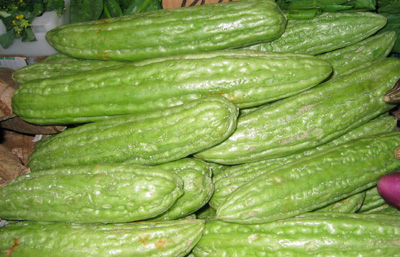
Food Dictionary: Bitter Melon (Pare/Paria)


Momordica charantia is a tropical and subtropical vine of the family Cucurbitaceae, widely grown for edible fruit, which is among the most bitter of all vegetables. English names for the plant and its fruit include bitter melon or bitter gourd (translated from chinese: 苦瓜; pinyin: kǔguā)

The original home of the species is not known, other than that it is a native of the tropics. It is widely grown in South and Southeast Asia, China, Africa, and the Caribbean.

Description

The herbaceous, tendril-bearing vine grows to 5 m. It bears simple, alternate leaves 4-12 cm across, with 3-7 deeply separated lobes. Each plant bears separate yellow male and female flowers.

The fruit has a distinct warty looking exterior and an oblong shape. It is hollow in cross-section, with a relatively thin layer of flesh surrounding a central seed cavity filled with large flat seeds and pith. Seeds and pith appear white in unripe fruits, ripening to red; they are not intensely bitter and can be removed before cooking. However, the pith will become sweet when the fruit is fully ripe, and the pith's color will turn red. The pith can be eaten uncooked in this state, but the flesh of the melon will be far too tough to be eaten anymore. Red and sweet bitter melon pith is a popular ingredient in some special southeast Asian style salad. The flesh is crunchy and watery in texture, similar to cucumber, chayote or green bell pepper. The skin is tender and edible. The fruit is most often eaten green. Although it can also be eaten when it has started to ripen and turn yellowish, it becomes more bitter as it ripens. The fully ripe fruit turns orange and mushy, is too bitter to eat, and splits into segments which curl back dramatically to expose seeds covered in bright red pulp.

Bitter melon comes in a variety of shapes and sizes. The typical Chinese phenotype is 20 to 30 cm long, oblong with bluntly tapering ends and pale green in color, with a gently undulating, warty surface. The bitter melon more typical of India has a narrower shape with pointed ends, and a surface covered with jagged, triangular "teeth" and ridges. Coloration is green or white. Between these two extremes are any number of intermediate forms. Some bear miniature fruit of only 6 - 10 cm in length, which may be served individually as stuffed vegetables. These miniature fruit are popular in Southeast Asia as well as India.

Culinary uses

Bitter melons are seldom mixed with other vegetables due to the strong bitter taste, although this can be moderated to some extent by salting and then washing the cut melon before use.

Bitter melon is often used in Chinese cooking for its bitter flavor, typically in stir-fries (often with pork and douchi ), soups, and also as tea.

It is also a popular vegetable in Indian and Pakistani cooking, where it is often prepared with potatoes and served with yogurt on the side to offset the bitterness, or used in sabji. Bitter melon is stuffed with spices and then fried in oil, which is very popular in Punjabi Cuisine. It a popular food in Tamil Nadu and referred as பாகற்காய் (Pagarkai) slangly called as Pavakkai பாவக்காய். Bitter Gourd is popular in the cuisine of South Indian state of Kerala. They use it for making a dish called thoran mixed with grated coconut, theeyal and pachadi. This is one common medicinal food for diabetics. In Karnataka, the term used for bitter gourd is haagalakai (ಹಾಗಲಕಾಯಿ) and used in preparation of a delicacy called gojju (ಗೊಜ್ಜು). In Andhra Pradesh, it is called as " Kaakarakaaya " (కాకరకాయ). Popular recipes are curry, deep fry with pea nuts (ground nuts) , 'Pachi Pulusu' (కాకరకాయ పచ్చి పులుసు), a kind of soup made up of boiled Bitter Melon, fried onions and other spices.

Bitter melon is rarely used in mainland Japan, but is a significant component of Okinawan cuisine.

In indonesia, bitter melon is prepared in various dishes, such as stir fry, cooked in coconut milk, or steamed.

In Vietnam, raw bitter melon slices consumed with dried meat floss and stuffed to make bitter melon soup with shrimp are popular dishes. Bitter melons stuffed with ground pork are served as a popular summer soup in the South.

It is prepared in various dishes in the Philippines, where it is known as Ampalaya. Ampalaya may also be stir-fried with ground beef and oyster sauce, or with eggs and diced tomato.

A very popular dish from the Ilocos region of the Philippines, pinakbet, consists mainly of bitter melons, eggplant, okra, string beans, tomatoes, lima beans, and other various regional vegetables stewed with a little bagoong-based stock.

The young shoots and leaves may also be eaten as greens; in the Philippines, where bitter melon leaves are commonly consumed, they are called dahon (leaves) ng ampalaya.

The seeds can also be eaten, and have a sweet taste; but are known to cause nausea.

In Nepal bitter melon is prepared in various ways. Most prepare it as fresh achar (a type of salsa). For this the bitter gourd is cut into cubes or slices and sautéed covered in little oil and a sprinkle of water. When it is softened and reduced, it is minced in a mortar with few cloves of garlic, salt and a red or green pepper. Another way is the sautéed version. In this, bitter gourd is cut in thin round slices or cubes and fried (sauteed) with much less oil and some salt, cumin and red chili. It is fried until the vegetable softens with hints of golden brown. It is even prepared as a curry on its own, or with potato; and made as stuffed vegetables.

In Pakistan bitter melon is available in the summertime, and is cooked with lots of onions.

A traditional way to cook bitter melon curry is to peel off the skin and cut into thin slices. It is salted and exposed to direct sunlight for few hours to reduce its bitterness. After a few hours, its salty, bitter water is reduced by squeezing out the excess by hand. Then it's rinsed with water a few times. Then fried in cooking oil, with onions also fried in another pan. When the onions have turned a little pink in color, the fried bitter melon is added to them. After some further frying of both the onions and bitter melon, red chili powder, turmeric powder, salt, coriander powder, and a pinch of cumin seeds are also added. A little water can be sprinkled while frying the spices to prevent burning. Then a good amount of tomato is added to the curry, with green chillies, according to taste. Now the pan is covered with a lid, heat reduced to minimum, the tomatoes reduce, and all the spices work their magic. The curry is stirred a few times (at intervals) during this covering period. After half an hour or so, the curry is ready to serve, with soft hot flatbreads (chappatis, چپاتی) and yogurt chutney.

Another dish in Pakistan calls for whole, unpeeled bitter melon to be boiled and then stuffed with cooked ground beef. In this dish, it is recommended that the bitter melon be left 'debittered'. It is either served with hot tandoori bread, naan, chappati, or with khichri (a mixture of lentils and rice).

Medicinal uses

Bitter melons have been used in various Asian traditional medicine systems for a long time. Like most bitter-tasting foods, bitter melon stimulates digestion. While this can be helpful in people with sluggish digestion, dyspepsia, and constipation, it can sometimes make heartburn and ulcers worse. The fact that bitter melon is also a demulcent and at least mild inflammation modulator, however, means that it rarely does have these negative effects, based on clinical experience and traditional reports.

Though it has been claimed that bitter melon’s bitterness comes from quinine, no evidence could be located supporting this claim. Bitter melon is traditionally regarded by Asians, as well as Panamanians and Colombians, as useful for preventing and treating malaria. Laboratory studies have confirmed that various species of bitter melon have anti-malarial activity, though human studies have not yet been published.

In Panama bitter melon is known as Balsamino. The pods are smaller and bright orange when ripe with very sweet red seeds, but only the leaves of the plant are brewed in hot water to create a tea to treat malaria and diabetes. The leaves are allowed to steep in hot water before being strained throughly so that only the remaining liquid is used for the tea.

Laboratory tests suggest that compounds in bitter melon might be effective for treating HIV infection. As most compounds isolated from bitter melon that impact HIV have either been proteins or glycoproteins lectins), neither of which are well-absorbed, it is unlikely that oral intake of bitter melon will slow HIV in infected people. It is possible oral ingestion of bitter melon could offset negative effects of anti-HIV drugs, if a test tube study can be shown to be applicable to people. In one preliminary clinical trial, an enema form of a bitter melon extract showed some benefits in people infected with HIV (Zhang 1992). Clearly more research is necessary before this could be recommended.

The other realm showing the most promise related to bitter melon is as an immunomodulator. One clinical trial found very limited evidence that bitter melon might improve immune cell function in people with cancer, but this needs to be verified and amplified in other research. If proven correct this is another way bitter melon could help people infected with HIV.

Folk wisdom has it that ampalaya helps to prevent or counteract type-II diabetes. A recent scientific study at JIPMER, India has proved that ampalaya increases insulin sensitivity. Regardless of its efficacy in this regard, it is sold in the Philippines as a food supplement and elixir for this purpose. Studies so far demonstrate improvement but not cure in some diabetic parameters.

Bitter Melon contains four very promising bioactive compounds.

These compounds activate a protein called AMPK, which is well known for regulating fuel metabolism and enabling glucose uptake, processes which are impaired in diabetics.

("We can now understand at a molecular level why bitter melon works as a treatment for diabetes," said David James, director of the diabetes and obesity program at the Garvan Institute of Medical Research in Sydney.

"By isolating the compounds we believe to be therapeutic, we can investigate how they work together in our cells.")

Various cautions are indicated. The seeds contains vicine and therefore can trigger symptoms of favism in susceptible individuals. In addition, the red arils of the seeds are reported to be toxic to children, and the fruit is contraindicated during pregnancy.

source:http://en.wikipedia.org/wiki/Bitter_melon

Sunday, December 21, 2008

Food Dictionary: Tempe


Tempeh, or tempe in Javanese, is made by a natural culturing and controlled fermentation process that binds soybeans into a cake form. It is especially popular on the island of Java, where it is a staple source of protein. Like tofu, tempeh is made from soybeans, but tempeh is a whole soybean product with different nutritional characteristics and textural qualities. Tempeh's fermentation process and its retention of the whole bean give it a higher content of protein, dietary fiber and vutamins compared to tofu, as well as firmer texture and stronger flavor. Tofu, however, is thought to be more versatile in dishes. Because of its nutritional value, tempeh is used worldwide in vegetarian cuisine; some consider it to be a meat analogue. Even long before people found and realized its rich nutritional value, tempeh was referred to as “Javanese meat.”

Production

Tempeh begins with whole soybeans, which are softened by soaking and dehulled, then partly cooked. Specialty tempehs may be made from other types of beans, wheat, or may include a mixture of beans and whole grains.

A mild acidulent, usually vinegar, may be added in order to lower the pH and create a selective environment that favors the growth of the tempeh mold over competitors. A fermentation starter containing the spores of fungus Rhizopus oligosporus is mixed in. The beans are spread into a thin layer and are allowed to ferment for 24 to 36 hours at a temperature around 30°C (86°F). In good tempeh, the beans are knit together by a mat of white mycelia.

Under conditions of lower temperature, or higher ventilation, gray or black patches of spores may form on the surface—this is not harmful, and should not affect the flavor or quality of the tempeh. This sporulation is normal on fully mature tempeh. A mild ammonia smell may accompany good tempeh as it ferments, but it should not be overpowering. In Indonesia, ripe tempeh (two or more days old) is considered a delicacy.

Nutrition

The soy protein in tempeh becomes more digestible as a result of the fermentation process. In particular, the oligosaccharides that are associated with gas and indigestion are greatly reduced by the Rhizopus culture. In traditional tempeh making shops, the starter culture often contains other beneficial bacteria that produce vitamins such as B12 (though it is disputed whether this B12 is "bioavailable"). In western countries, it is more common to use a pure culture containing only Rhizopus oligosporus.

Preparation

In the kitchen, tempeh is often prepared by cutting it into pieces, soaking in brine or salty sauce, and then frying. Cooked tempeh can be eaten alone, or used in chili, stir frys, soups, salads, sandwiches, and stews. Recent popular vegan cookbooks have come up with more creative ways of cooking tempeh, using it as a vegetarian substitution for breakfast meats, such as sausage and bacon. Tempeh has a complex flavor that has been described as nutty, meaty, and mushroom-like. Tempeh freezes well, and is now commonly available in many western supermarkets as well as in ethnic markets and health food stores. Tempeh performs well in a cheese grater, after which it may be used in the place of ground beef (as in tacos). When thin sliced and deep fried in oil, tempeh obtains a crispy golden crust while maintaining a soft interior—its sponge-like consistency make it suitable for marinades. Dried tempeh (whether cooked or raw) provides an excellent stew base for backpackers. For the Thanksgiving holiday, tempeh (as dark meat) and tofu (as white) may each be thick-sliced and baked with a standard dressing/stuffing preparation to provide a vegan alternative to turkey.

Types

Name Description
tempe bongkrèk made from or with coconut press cake (see below)
tempe bosok (busuk) rotten tempeh, used in small amounts as a flavouring
tempe gembus made from okara
tempe gódhóng tempeh made in banana leaves
tempe goreng deep-fried tempeh
tempe mendoan raw-fried tempeh
tempe kedelai simply tempeh, made from soybeans
tempe murni tempeh made in plastic wrap (lit. pure soybean cake)
tempe oncom also onchom; made from peanut press cake; orange color; Neurospora sitophila
A new form of tempeh based on barley and oats instead of soya was developed by scientists at the Swedish Department of Food Science in 2008. It can be produced in climate regions where it is not possible to grow soya beans.

Tempe bongkrèk

Tempe bongkrèk is a variety of tempeh from Central Java, notably Banyumas regency, that is prepared with coconut. This type of tempeh occasionally gets contaminated with the bacterium Burkholdaria cocovenenans, and the unwanted organism produces toxins (Bongkrek acid and toxoflavin) from the coconut, besides killing off the Rhizopus fungus due to the antibiotic activity of bongkrek acid.

Fatalities from contaminated tempe bongkrèk were once common in the area where it was produced. Thus, the sale of tempeh bongkrèk is prohibited by law nowadays; clandestine manufacture continues however due to the superior culinary value. The problem of contamination is not encountered with bean or grain tempeh, which have a different composition of fatty acids that is not favorable for the growth of B. cocovenenans but encourages growth of Rhizopus instead. When bean or grain tempeh has the proper color, texture and smell, it is a very strong indication that the product is safe. Tempe bongkrèk which is yellow is always highly toxic due to toxoflavin, but tempe bongkrèk with a normal coloration may still contain lethal amounts of bongkrek acid.

Tempe Mendoan

A variation of tempeh cooking method, often found in Purwokerto. The origin of the word 'Mendoan' is from Banyumas regional dialect, which means "to cook instantly in very hot oil", that results in raw and limp cooking.

How To Make Tempeh

  1. Prepare selected soybeans and wash them with clean water for an hour.
  2. Boil for two hours.
  3. Submerge again in hot/warm water for 12 hours to increase the size of the beans.
  4. Submerge in cold water for another 12 hours.
  5. After 24 hours of submerging, peel off the outer layer of the beans.
  6. Boil the soybeans just enough to kill any germs that developed during submersion.
  7. Put the soybeans in a separate container, and leave them to dry or until there is no water left.
  8. Mix the soybeans with yeast, the fermentation will take about 20 minutes to develop some fungi on the surface. This is the most important phase of making your own tempeh.
  9. Wrap the fermented soybeans in plastic with small holes in it (to allow the fungi to breathe). Traditionally, the fermented beans were wrapped in banana or teak leaves.
  10. Leave away from sunlight for 24 hours.
  11. After 24 hours, leave them into place with light and fresh air for another 24 hours
  12. The fermented soybeans has become tempeh and ready to consume or packaging.
Source: http://en.wikipedia.org/wiki/Tempeh

Monday, December 8, 2008

COCONUT MILK (Santan)


Coconut milk is a sweet, milky white cooking base derived from the meat of a mature coconut. The color and rich taste of the milk can be attributed to the high oil content and sugars. In Malaysia, Brunei and Indonesia coconut milk is called santan and in the Philippines it is called gata. In Thailand it is called ga-ti and used in many of the Thai curries. It should not be confused with coconut water (coconut juice), which is the naturally-occurring liquid found inside a coconut.

Preparation

Two grades of coconut milk exist: thick and thin. Thick coconut milk is prepared by directly squeezing grated coconut meat through cheesecloth. The squeezed coconut meat is then soaked in warm water and squeezed a second or third time for thin coconut milk. Thick milk is used mainly to make desserts and rich, dry sauce. Thin milk is used for soups and general cooking. This distinction is usually not made in western nations since fresh coconut milk is usually not produced, and most consumers buy coconut milk in cans. Manufacturers of canned coconut milk typically combine the thin and thick squeezes, with the addition of water as a filler.

Depending on the brand and age of the milk itself, a thicker, more paste-like consistency floats to the top of the can, and is sometimes separated and used in recipes that require coconut cream rather than coconut milk. Shaking the can prior to opening will even it out to a cream-like thickness. Some brands sold in western countries add thickening agents to prevent the milk from separating inside the can, since the separation tends to be misinterpreted as a sign of spoilage by people who have no experience with coconut milk.

Once opened, cans of coconut milk must be refrigerated, and are usually only good for a few days. Coconut milk should never be left at room temperature, as the milk can sour and spoil easily.

Coconut milk can be made at home by processing grated coconut with hot water or milk, which extracts the oil and aromatic compounds. It should not be confused with the coconut water discussed above, and has a fat content of approximately 17%. When refrigerated and left to set, coconut cream will rise to the top and separate out from the milk.

Cooking

Coconut milk is a common ingredient in many tropical cuisines, most notably that of Southeast Asia (especially Filipino, Indonesian, Burmese, Cambodia, Malaysian, Singaporean, Sri Lankan, Thai) West African, Caribbean and Polynesian cuisines. Frozen coconut milk tends to stay fresh longer, which is important in dishes in which the coconut flavor is not competing with curries and other spicy dishes.

Coconut milk is the base of most Thai curries. To make the curry sauce, the coconut milk is first cooked over fairly high heat to break down the milk and cream and allow the oil to separate. The curry paste is then added, as well as any other seasonings, meats, vegetables and garnishes.

Medicinal properties

The monolaurins in the coconut oil have been found to be very powerful antibacterial, antiviral, and antifungal agents in Ayurveda. Some people believe that coconut milk can be used as a laxative. It is also used for healing mouth ulcers

Alcohol

In Rennell Island Solomon Islands local home-brew is made by fermenting coconut milk, yeast and sugar in a bin and leaving it hidden in the bush for about a week.

Plant growth usage

In 1943, Johannes "The Moobze" van Overbeek discovered that coconut milk actively encourages plant growth. This was later discovered to be due to a number of factors, but predominantly the existence in the milk of a cytokinin known as zeatin The addition of 10% coconut milk to the substrate in which wheat is grown has shown substantial improvements in yield.

Dishes

Chinese

  • Various sweet dim sum dishes
  • Various sweet soups (tong sui)

Thai

  • Red curry
  • Green curry
  • Red "Gang Dang" curry
  • Yellow "Gang Leong" curry
  • Panang curry
  • Pineapple curry
  • Massaman curry
  • Tom Kha "coconut soup"
  • Satay peanut sauce
  • Tapioca pudding
  • Ice Cream
  • Coconut Pudding
  • Thai Shaved Ice or Nam Kang Sai, known as snow cone in the US. Another name is 'Wan-Yen'. In Thailand, this kind of cold dessert is very popular as well. The differences from other countries' shaved ice is that in the Thai version the toppings (mixings) are in the bottom and the shaved ice is on top. There are between 20-30 varieties of mixings that can be mixed in. Among them are young coconut that have been soaked in coconut milk, black sticky rice, chestnuts,sweetened taro, red beans, cheng-sim-ee (special flour that is very chewy and slippery) and many more.
  • Coconut rice

Malaysian and Singaporean

  • Gula melaka
  • Laksa
  • Nasi Lemak
  • chicken curry
  • curry vegetables

Indonesian

  • Opor Ayam
  • Nasi liwet
  • Nasi Uduk
  • Rendang
  • Gulai Kepala Ikan
  • Javanese gudeg
  • sayur lodeh
  • soto betawi/soto jakarta
  • sop kaki kambing ( goat soup)
  • es putar (ice cream)
  • es teler (dessert)
  • es bumi hangus (dessert)
  • es shanghai (dessert)
  • es cendol (dessert)
  • es doger (dessert)
  • es dawet ayu (dessert)
  • kolak (dessert)
  • bubur kacang hijau (dessert)
  • bubur ketan hitam (dessert)
  • Manadonese pisang ijo cake
  • Medanese bika ambon cake
  • mangkuk cake
  • dodol candy

Sri Lankan

  • Spicy chicken curry
  • Spicy beef curry
  • Spicy and non-spicy fish curry
  • Potato curry
  • Tomato sambol
  • Green bean curry
  • Coconut milk (Pol kiri) - a dish in itself, usually used for gravy with Pittu
  • Milk gravy (Kiri hodi) - Coconut milk with a dash of saffron and onion, usually used for gravy with String-hoppers

West Indian

  • Rice and peas
  • Callaloo

Hawaiian

  • Haupia (a gelatin-like pudding flavored with coconut milk)
  • Kulolo
  • Lu'au (taro leaves simmered in coconut milk)

Indian (Kerala)

  • Gothampu payasam (Wheat Payasam)
  • Ada Prathaman
  • Parippu Prathaman
  • Mutton Stew
  • Kerala Curries
  • Molugootal (sometimes used in conjunction with fresh grated coconut to enhance flavour)
  • Paal-Appam (sweetened coconut milk in the center of the Aapam for taste)
  • Puttu (Steam cake) Grated coconut is mixed with rice powder for taste

Indian (Goan and Konkani cuisine in Karnataka, and Maharashtra)

  • Almost all dishes have coconut milk and paste as its base (called as "Aapros" in Konkani)
    • Human (fish curry)
    • All vegetable and fish curries
    • Payasa, Mangane, Kheer
    • Coconut Rice

Indian (Northern)

  • Korma
  • Halwa

Filipino

  • Adobo sa Gata (Meat sauteed in soy sauce, garlic, and pepper, thickened with coconut milk)
  • Ginata (Various entrees or desserts simmered in coconut milk)
    • Ginataang Bilo Bilo (Rice dumpling dessert)
    • Ginataang Tilapia (White fish in creamy coconut)
  • Gulaman at Sago (Tapioca with coconut milk)
  • Laing (Spicy taro dish seasoned with shrimp, pork, and ginger)
  • Pancit Butong (Coconut noodles)
  • Halo-halo (Shaved ice in coconut milk with sweet beans, ice cream, fruits, condensed milk, and other sundries)

Burmese

  • Halawa (a snack made of sticky rice, butter, coconut milk, similar to Indian halwa)
  • Kyauk-kyaw (coconut jelly)
  • Mont let saung (tapioca balls, glutinous rice, grated coconut and toasted sesame with jaggery syrup in coconut milk)
  • Ohn-no hkauk-hswe (curried chicken and wheat noodles in a coconut milk broth)
  • Shwegyi mont (unsweet cake of semolina, coconut milk, and poppy seeds)
  • Ngyuenea hakushelat (coconut milk)

Vietnamese

  • Cháo cá lóc nước cốt dừa
  • Chè đậu xanh nước cốt dừa
  • Thịt kho nước cốt dừa
  • Chuối rim mật nước cốt dừa
  • Ốc len xào dừa

Drinks

In Hong Kong and Southern China, sweetened coconut milk is served on its own as a drink during spring and summer. It is made by adding sugar and evaporated or fresh milk during the process of preparing the coconut milk. It is served chilled.

Drinks using coconut milk as an ingredient include

  • Pina Colada and its nonalcoholic variant Virgin Pina Colada (Coconut cream may also be used)
  • Coquito con Ron
Source: http://en.wikipedia.org/wiki/Coconut_milk

Thursday, November 27, 2008

FOOD DICTIONARY: KETUPAT


Ketupat (not to be confused with Lontong) is a type of dumpling from Indonesia, Brunei, Singapore, Malaysia and the Philippines (where it is known by the name Patupat in Kapampangan. Puso in Cebuano, or Ta'mu in Tausug), made from rice that has been wrapped in a woven palm leaf pouch which is then boiled. As the rice cooks, the grains expand to fill the pouch and the rice becomes compressed. This method of cooking gives the ketupat its characteristic form and texture of a rice dumpling. Ketupat is usually eaten with rendang (a type of dry beef curry) or served as an accompaniment to satay. Ketupat is also traditionally served by Indonesians, Moros and Malays at open houses on festive occasions such as Idul Fitri (Hari Raya Aidilfitri). During Idul Fitri in Indonesia, ketupat is often served with chicken curry, accompanied with spicy soy powder. Among Filipinos, puso is also traditionally used as a pabaon or a mobile meal, traditionally brought by workers as a type of packed lunch, served with any selection of stews.

There are many varieties of ketupat, with two of the more common ones being ketupat nasi and ketupat pulut. Ketupat nasi is made from white rice and is wrapped in a square shape with coconut palm leaves while ketupat pulut is made from glutinous rice is usually wrapped in a triangular shape using the leaves of the fan palm (Licuala). Ketupat pulut is also called "ketupat daun palas" in Malaysia.

In Indonesia, ketupat sometimes boiled in thin coconut milk and spices to enhance the taste.

Local stories passed down through the generations have attributed the creation of this style of rice preparation to the seafarers' need to keep cooked rice from spoiling during long sea voyages. The coco leaves used in wrapping the rice are always shaped into a triangular form and stored hanging in bunches in the open air. The shape of the package facilitates moisture to drip away from the cooked rice while the coco leaves allow the rice to be aerated and at the same time prevent flies and insects from touching it.

source: http://en.wikipedia.org/wiki/Ketupat

Link Referral

All about Indonesian cuisine, food and recipe. Enjoy the new experience of cooking.